Stanley Cohen's classic 1972 definition:
"Societies appear to be subject, every now and then, to periods of moral panic. A condition, episode, person, or groups of persons emerges to become defined as a threat to societal values and interests; its nature is presented in a stylized and stereotypical fashion by the mass media; the moral barricades are manned by editors, bishops, politicians and other right-thinking people; socially accredited experts pronounce their diagnoses and solutions; ways of coping are evolved (or more often) resorted to; the condition then disappears, submerges, or deteriorates and becomes more visible."
The key issue in determining whether or not something is a moral panic is what Goode and Ben-Yehuda (1994) have called "disproportionality"--the degree of public concern over the problem must be in excess of what would be appropriate were public concern proportional to the amount of objective harm the problem actually causes.
Wednesday, May 21, 2008

Folk Devils
"In the gallery of types that society erects to show its members which roles should be avoided and which should be emulated, these groups have occupied a constant position as folk devils: visible reminders of what we should not be" (Cohen 1972: 10).
Examples of folk devils:
Mods and Rockers

Witches

Satanic Cults

Young black men

Examples of folk devils:
Mods and Rockers

Witches

Satanic Cults

Young black men

Risk Society
Ulrich Beck (1992) has described contemporary society as a "risk society" in which the hazardous chemical, nuclear, and environmental byproducts of modernity become modernity's central concern.


Some have argued that these kinds of risks stand outside the moral panic/ folk devil framework. What is the proportional response to an issue like global warming? Who are the folk devils to scapegoat and fear?


Some have argued that these kinds of risks stand outside the moral panic/ folk devil framework. What is the proportional response to an issue like global warming? Who are the folk devils to scapegoat and fear?
Where does the threat/ panic/ risk of terrorism fit into this framework?
Beck (2002) argues that terrorism is an example of the new reflexive risks of modernity. The fanatical anti-modern, anti-global viewpoint of terrorists is a byproduct of modern globalization.
The Terrorist as Folk Devil
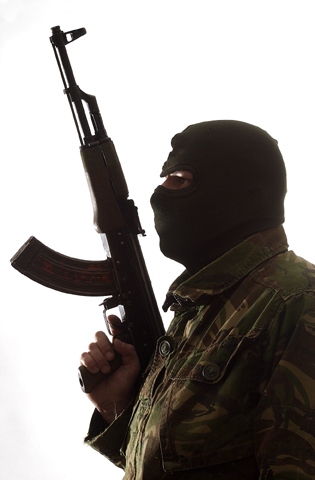
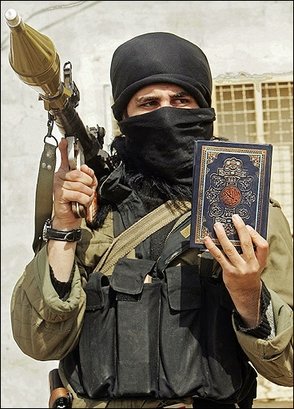
Clearly, terrorism also operates within the moral panic/ folk devil framework


Subscribe to:
Comments (Atom)