Stanley Cohen's classic 1972 definition:
"Societies appear to be subject, every now and then, to periods of moral panic. A condition, episode, person, or groups of persons emerges to become defined as a threat to societal values and interests; its nature is presented in a stylized and stereotypical fashion by the mass media; the moral barricades are manned by editors, bishops, politicians and other right-thinking people; socially accredited experts pronounce their diagnoses and solutions; ways of coping are evolved (or more often) resorted to; the condition then disappears, submerges, or deteriorates and becomes more visible."
The key issue in determining whether or not something is a moral panic is what Goode and Ben-Yehuda (1994) have called "disproportionality"--the degree of public concern over the problem must be in excess of what would be appropriate were public concern proportional to the amount of objective harm the problem actually causes.
Wednesday, May 21, 2008

Folk Devils
"In the gallery of types that society erects to show its members which roles should be avoided and which should be emulated, these groups have occupied a constant position as folk devils: visible reminders of what we should not be" (Cohen 1972: 10).
Examples of folk devils:
Mods and Rockers

Witches

Satanic Cults

Young black men

Examples of folk devils:
Mods and Rockers

Witches

Satanic Cults

Young black men

Risk Society
Ulrich Beck (1992) has described contemporary society as a "risk society" in which the hazardous chemical, nuclear, and environmental byproducts of modernity become modernity's central concern.


Some have argued that these kinds of risks stand outside the moral panic/ folk devil framework. What is the proportional response to an issue like global warming? Who are the folk devils to scapegoat and fear?


Some have argued that these kinds of risks stand outside the moral panic/ folk devil framework. What is the proportional response to an issue like global warming? Who are the folk devils to scapegoat and fear?
Where does the threat/ panic/ risk of terrorism fit into this framework?
Beck (2002) argues that terrorism is an example of the new reflexive risks of modernity. The fanatical anti-modern, anti-global viewpoint of terrorists is a byproduct of modern globalization.
The Terrorist as Folk Devil
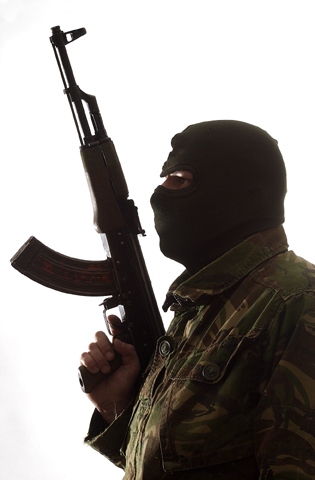
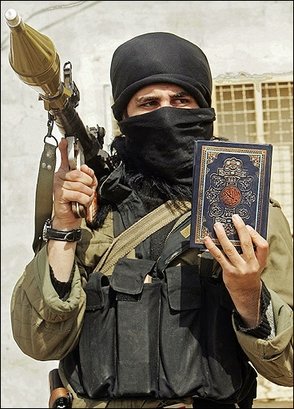
Clearly, terrorism also operates within the moral panic/ folk devil framework


Market Research as Surveillance

Consumer behavior is a means of identifying problematic social types. Most of the surveillance technologies of agencies like the NSA or the dismantled Total Information Awareness program attempt to piggyback off of existing demographic research accumulated by the private sector through commercial monitoring. In the same way that Bertillon collected anthropometric data in order to identify criminal types in the nineteenth century, the US surveillance apparatus today collects market research and consumer demographics. Buying the wrong kinds of books or airline tickets, living in the wrong kind of housing, and attending the wrong kind of events in the wrong combination is liable to mark one as potentially dangerous. These new surveillance programs translate stereotypes into algorithms that can calculate the sum total of one’s market behavior and determine the appropriate degree of suspicion.
Folk Devil as Celebrity


Daniel Boorstin said celebrities are people who are "known for their well-knownness."
The misinformation, rumor, and folklore surrounding the few iconic terrorist folk devils suggests that they are known less for their real actions or biographies and more for the publicity that surrounds them. Bin Laden's position in the pop culture landscape is little different from other controversial, reclusive celebrities who maintain a devoted following--and many angry critics--despite fairly limited recent output.
Today the power of the terrorist threat is directly related to the ubiquity of mass consumerism. This suggests that ours is not an era in which the kinds of bureaucratic fixes and scientific/technocratic debates envisioned by the theory of the risk society have gained ascendancy.
Management of risks before they happen is less important than the mass consumption of catastrophes once they do happen.
Management of risks before they happen is less important than the mass consumption of catastrophes once they do happen.
Thinking of the moral panic over terrorism as a fundamental part of consumer society allows for corrections to the problem of disproprotionality. The risk society thesis suggests that determining proportional responses to today's new risks is difficult or impossible. But this is not a problem for consumer societies. In the world of mass marketing and advertising, proportionate campaigns do not exist--the more publicity the better. Campbell (1987) has defined consumption itself as an exercise in "self-illusory hedonism"--a longing to experience in reality that which we have already imagined. This longing results in a ceasless quest for novelties that we hope will fulfill our fantasies--in this case, our fantasies of safety and security.
The terrorist folk devil is a creation of intense marketing efforts--a threat novel in its strength, its scope, and its continued ability to inspire renewed fears and entrepreneurial responses to those fears. As with all modern consumption, our imaginations are turned against us. In this case, our fearful imaginations are steered towards consumption of the "war on terror" brand of products and images while we are directed to construct our self-images in opposition to the gruesome, freedom-hating terrorists whose specter continues to haunt us.
The terrorist folk devil is a creation of intense marketing efforts--a threat novel in its strength, its scope, and its continued ability to inspire renewed fears and entrepreneurial responses to those fears. As with all modern consumption, our imaginations are turned against us. In this case, our fearful imaginations are steered towards consumption of the "war on terror" brand of products and images while we are directed to construct our self-images in opposition to the gruesome, freedom-hating terrorists whose specter continues to haunt us.
Subscribe to:
Comments (Atom)